
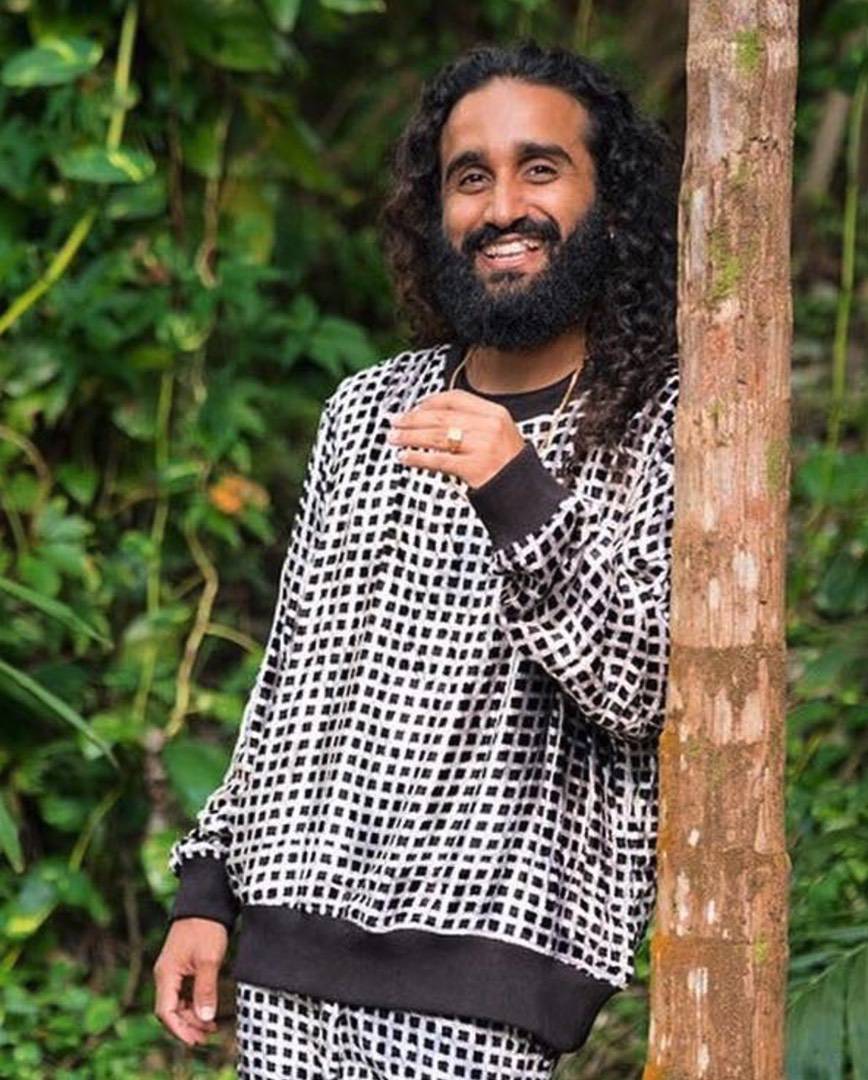
The Visionary Behind the Vision
There is a particular kind of creative mind that refuses to be defined by a single discipline — one that moves fluidly between art forms, between communities, between the local and the global, always asking the same underlying question: how do we use culture to change the world? Chetan Kothari, known to virtually everyone as Che, is precisely that kind of person. Photographer, festival founder, artist manager, activist, and spiritual seeker, he is one of the most quietly influential figures in the contemporary Caribbean and global music landscape.
Born Into Culture
Born on October 12th, 1983, Che grew up in Toronto, Canada — a city that, perhaps more than any other in the world, is a living experiment in what happens when cultures from every corner of the globe are placed in close proximity with one another. It was a formative environment for a young man whose entire life would be devoted to building bridges between communities. His path into the arts began with a camera.
He realised his passion for photography on a family trip in South America at Carnival, when the performers invited him to take pictures of them. This caused him to understand that the camera is a tool to get closer to people. That insight — that art is fundamentally about human connection — has never left him. He earned a Bachelor of Fine Arts degree in Still Photography from Ryerson University in Toronto, and quickly established himself as a sought-after portrait photographer of remarkable range and intimacy.
Photographing the World’s Icons
Che went on to have intimate portrait sessions with the likes of Damian and Ziggy Marley, Nas, Erykah Badu, Ashanti, Ice Cube of NWA, Chuck D of Public Enemy, Common, Cypress Hill, A Tribe Called Quest, Talib Kweli, Dead Prez, and many others — for both personal work and for magazine covers. These were not sterile commercial shoots. They were genuine encounters, portraits that captured artists in unguarded, authentic moments. The resulting images have been part of over 100 exhibitions across museums and streets in Toronto, Kingston, New York, Tokyo, Bombay, and more.
It was a career most creatives would have been content to build upon for a lifetime. Che had other plans.
Building Manifesto: Toronto’s Cultural Heartbeat
Recognising that Toronto was home to world-class artists who simply lacked the platform and visibility they deserved, Che channelled his energy into something bigger than any single photograph. He founded Manifesto Community Projects and its flagship initiative, the Manifesto Festival of Community & Culture. Manifesto grew to become Canada’s largest celebration of hip hop culture, bringing together artists, performers, and community members to showcase local youth culture and provide a stage for voices marginalised from mainstream arts festivals.
Over more than a decade, Manifesto showcased over 1,500 artists, paid over $1 million to young artists and organisers, created 75-plus internships and 1,200-plus employment opportunities, and produced over 100 events. Che served as its Executive Director for seven years, and the festival’s impact on Toronto’s arts scene cannot be overstated — it is widely credited with helping shift the culture of the city toward one where artists support and celebrate each other, a spirit that arguably contributed to the global rise of Toronto as a music capital.
He also co-founded a sister organisation of Manifesto in Kingston, Jamaica, which was instrumental in the Reggae Revival movement. The footprint of Manifesto eventually extended to Barbados as well, cementing Che’s role as a pan-Caribbean cultural architect even while working from Toronto.
Gifted Management: Taking Artists to the World
Alongside his festival work, Che built Gifted Management, his artist management and creative services company. Through Gifted, he has played a role in the careers of artists including Ms. Lauryn Hill, Machel Montano, Protoje, Mustafa the Poet, and more. It is a roster that reflects his range — spanning soca, reggae, hip hop, and spoken word, united by a commitment to artists of substance and cultural depth.
His most high-profile partnership has been with Machel Montano. In May 2014, Machel’s mother and longtime manager Elizabeth Montano ceded key management responsibilities to Toronto-based Che Kothari, marking the beginning of a new chapter in the King of Soca’s career. Machel himself has spoken about how deliberately he chose Che for the role. During a moment of vulnerability, in an apartment in the US, Machel wrote in his journal the exact type of person he needed as a manager — and that person proved to be Che Kothari.
Che helped reorganise Machel’s operation, align the team, modernise the systems, and bring global structure to a Caribbean music career built for long-term sustainability. His approach to management is not purely transactional. He has been a collaborator, a co-creator, and a stabilising presence. Che co-directed Machel’s documentary Like Ah Boss, which traces the soca king’s rise from Siparia schoolboy to international icon — a film that required as much emotional intelligence as it did creative vision.
A Spiritual Dimension
One of the most distinctive and less-discussed aspects of Che’s influence is the spiritual dimension he has brought to his work. When Machel Montano was trying to slow down his pace after decades of relentless touring and recording, Che turned to yoga and meditation as essential elements, introducing Montano to the teachings of Sadhguru, the Indian yoga guru and spiritual teacher. Yogic practices and daily meditation gave Montano the relief he so desperately needed. Both men became devoted to Sadhguru’s Isha Foundation, and Che went on to launch the Conscious Music Circle — an initiative to bring those tools of inner wellbeing to the broader arts community.
His music label manages 3,500 copyrights and distributes more than US$1 million in royalties annually, supporting Caribbean creatives and their contributions to the global music landscape.
The Bigger Picture
What makes Che Kothari remarkable is not any single achievement, but the coherence of vision running through all of them. Whether he is behind a lens, behind a festival stage, or behind one of the world’s most celebrated soca artists, he is always doing the same thing: creating spaces where culture can flourish, where artists are properly resourced and respected, and where communities find themselves reflected and uplifted. In a music industry that can be transactional and extractive, Che Kothari represents a different model entirely — one built on purpose, partnership, and the quiet belief that art, at its best, is a force for human transformation.